 Site
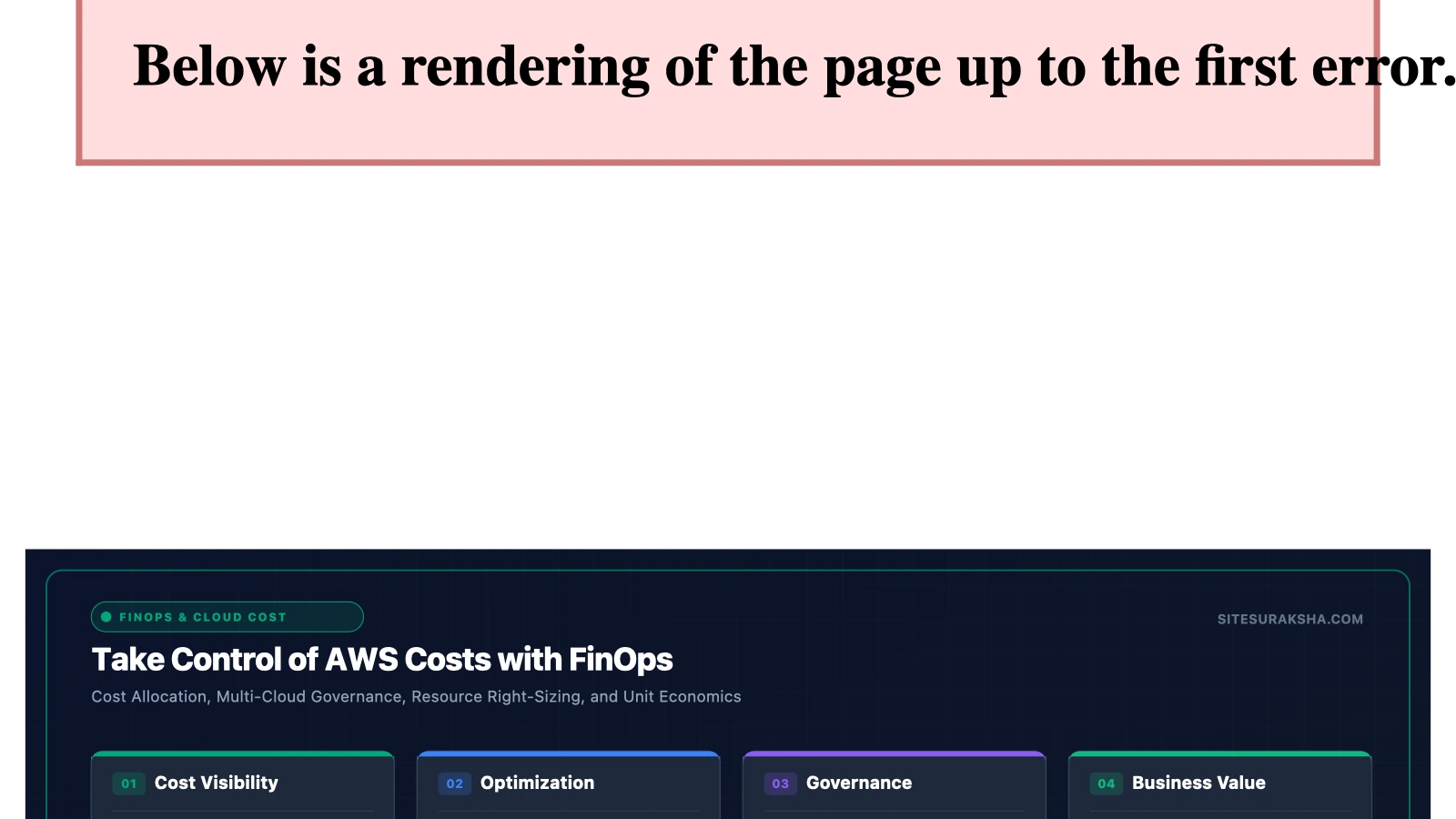
Take Control of Your AWS Costs: Using FinOps for Maximum Efficiency


Chat with an engineer on WhatsApp within 15 minutes.
Cloud computing has become an indispensable asset
for businesses of all sizes. Amazon Web Services (AWS), as a leading cloud service provider,
offers many services that enable companies to innovate and scale efficiently. However,
with great power comes great responsibility, managing and optimizing costs on AWS can be a
complex task. This is where Cloud Cost Optimization and FinOps (Financial Operations) platforms
come into play, helping organizations to gain unprecedented control over their cloud
expenses.
This blog aims to guide you through effective strategies to take control of your AWS costs,
highlighting the importance and advantages of using Cloud Cost Optimization and FinOps
software solutions to maximize efficiency and align your cloud investment with your business
goals.
Understanding the Complexity of AWS Costs
Before looking at optimization strategies, it’s important to understand the inherent complexities
of AWS billing and cost management. AWS offers a flexible but intricate pricing structure with
various services, regions, and pricing models. The dynamic nature of cloud environments,
combined with the scale and granularity of AWS resources, can make cost tracking and
optimization challenging.
The Limitations of Native AWS Tools While AWS provides native tools
like AWS Cost Explorer, AWS Budgets, and AWS Trusted Advisor, these tools may not offer the
full insights and automation capabilities that growing businesses require. They
often lack real-time visibility, advanced analytics, and the collaborative features
necessary for effective financial operations.
The Importance of Cloud Cost Optimization and FinOps Platforms Cloud
Cost Optimization and FinOps platforms are designed to bridge this gap by providing advanced
features that enhance visibility, control, and optimization of cloud expenses.
Enhanced Visibility and Transparency Make a one-time payment for a
discount on the hourly charge for an instance you use for a one- or three-year term.
Unified View of Costs: Gain a consolidated view of your cloud
spending across multiple accounts, services, and regions in real-time.
Detailed Cost Breakdown: Drill down into costs by department,
project, or application to identify key cost drivers.
Customizable Dashboards: Tailor dashboards to meet the specific
needs of different stakeholders within your organization.
Advanced Analytics and Insights
Predictive Forecasting: Use machine learning algorithms to
forecast future spending and resource needs.
Anomaly Detection: Automatically identify unusual spending patterns
or cost spikes to prevent budget overruns.
Cost Allocation and Chargeback: Accurately allocate cloud costs to
respective business units for better accountability.
Automation and Optimization
Automated Recommendations: Receive findings you can act on on
rightsizing, purchasing options, and resource scheduling.
Policy Enforcement:Implement cost control policies that
automatically enforce best practices across the organization.
Integration with DevOps: Cleanly integrate cost optimization into
your development and deployment workflows.
Build a FinOps Culture
Collaboration Tools: Help communication between finance,
operations, and engineering teams to align on cost objectives.
Educational Resources:Provide training and documentation to promote
cost-aware decision-making.
Governance and Compliance: Make sure adherence to internal policies and
external regulations through automated compliance checks.
Strategies to Control AWS Costs
Implementing the right strategies, supported by a solid FinOps platform, can significantly
reduce your AWS expenses without compromising performance.
Establish a FinOps Team
Cross-Functional Collaboration: Bring together stakeholders from
finance, operations, and development to share insights and responsibilities.
Set Clear Objectives:Define KPIs and goals for cost optimization
efforts to measure success effectively.
Continuous Improvement:Encourage a culture of ongoing evaluation and
refinement of cost management practices.
Use Advanced Cost Management Tools
Real-Time Monitoring: Keep track of spending as it happens to make
timely decisions.
Custom Alerts:Set up notifications for when costs exceed predefined
thresholds.
Full Reporting:Generate reports that provide usable
insights for different teams and management levels.
Implement Automation for Cost Savings
Resource Scheduling: Automatically shut down non-critical resources
during off-peak hours.
Rightsizing Recommendations:Continuously analyze and adjust resource
allocations based on actual usage patterns.
Optimize Purchasing Strategies:Use analytics to decide between
On-Demand, Reserved Instances, or Savings Plans.
Promote Cost-Aware Development Practices
Embed Cost Metrics: Integrate cost considerations into the software
development lifecycle.
Developer Training:Educate developers on how their coding and
architectural choices impact cloud costs.
Feedback Loops:Create mechanisms for developers to receive cost
impact data related to their deployments.
The Advantages of Using FinOps Platforms
By adopting a FinOps platform, companies can find several key benefits:
Operational Efficiency: Automate repetitive tasks and focus on
strategic initiatives.
Cost Reduction: Identify and eliminate waste, leading to significant
savings.
Improved Accountability: Build a culture where every team is
responsible for their cloud spending.
Scalability: Manage costs effectively even as your cloud environment
grows in complexity.
Strategic Decision-Making: Use data-driven insights to inform
business strategies and investments.
Action Items for Companies
Assess Your Current Cost Management Practices: Evaluate how you
currently track and manage AWS costs.
Explore FinOps Platforms: Research and select a Cloud Cost
Optimization platform that aligns with your organizational needs.
Form a Dedicated FinOps Team: Establish a team responsible for cloud
financial management and optimization.
Implement Cost Allocation Strategies: Use tagging and account
structures to allocate costs accurately.
Set Up Real-Time Monitoring and Alerts: Enable immediate visibility
into spending patterns and anomalies.
Automate Optimization Processes: Use the platform’s automation
features to optimize resources continually.
Educate Your Organization: Promote awareness and training around
cloud cost management best practices.
Integrate with Existing Workflows: Make sure the FinOps platform
integrates smoothly with your current tools and processes.
Establish Governance Policies: Define and enforce policies to
maintain control over cloud spending.
Regularly Review and Adapt: Schedule periodic reviews to assess
performance and adjust strategies as needed.
Conclusion
Taking control of your AWS costs is not only about cutting expenses; it’s about aligning your
cloud investment with your business objectives for sustainable growth. Cloud Cost Optimization
and FinOps platforms provide the tools and insights necessary to navigate the complexities of
AWS billing, offering enhanced visibility, automation, and collaboration. By embracing these
platforms and building a culture of financial accountability, your organization can maximize
the value of AWS services while maintaining fiscal responsibility.
Save on Cloud and AI. Get a Demo.
A short call to understand what you run, then a demo built around it. Not a slide deck,
and nothing to install.
- 1
Tell us what you are running
Enough to make the demo yours rather than generic. We do not touch your account to show you this.
2 minutes
- 2
A short call to understand your setup
Which clouds you run, how you ship, and where the cost questions actually come from.
15 minutes, within 1 business day
- 3
We show you your cost footprint
Cloud and AI spend in one view: what you are running, what it costs, and where it is concentrated.
30-minute demo, built for your stack
- 4
You leave knowing what it would catch
We price a real pull request in front of you and route it for approval. That is the part no dashboard does. You see exactly which of your own changes would have been flagged.
Yours to keep, demo or not
Every demo includes the free SiteSuraksha Savings Report. Connect read-only and your savings opportunities come back within days, ranked by value, with a walkthrough call included. Read-only, always: we never modify your infrastructure.
Is Your Website Fast & Secure?
Run an instant scan for security vulnerabilities, bloated plugins, and TTFB latency.
Need Help Securing or Speeding Up Your Site?
Get 24/7 proactive security WAF, daily cloud backups, and sub-second speed optimization from ₹3,470/mo.