 Site
Mastering Cloud Cost Management: A Modern Playbook
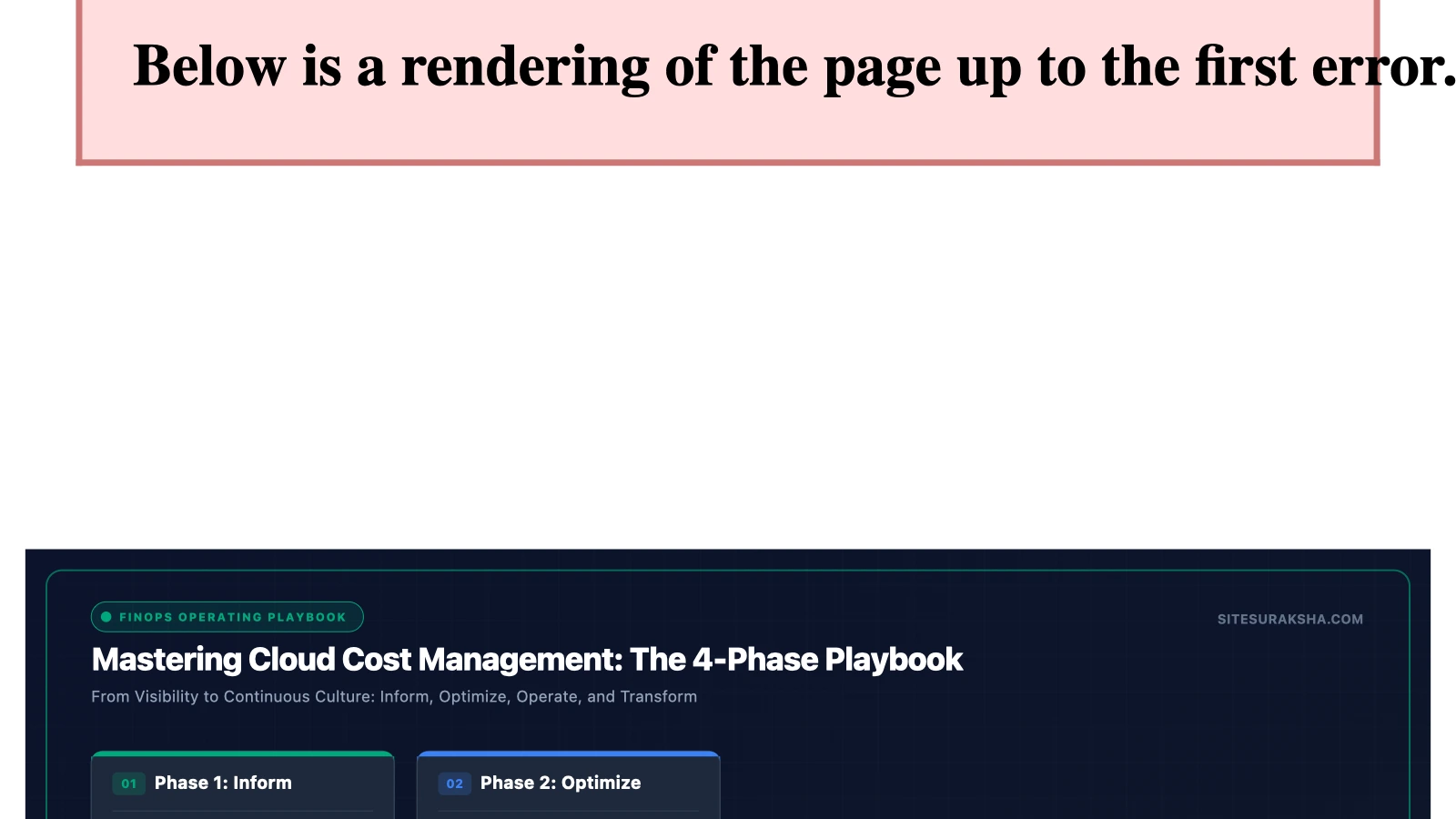
Mastering Cloud Cost Management: The Modern Playbook for Profitability
and Growth
The Critical Role of Cloud Cost Management in Business Success
Cloud cost management is about more than reducing expenses. It is about efficiency and growth. With skyrocketing cloud costs, complex pricing
models, and increasing multi-cloud adoption, businesses must gain
full visibility into their spending while making sure performance and
scalability. Optimizing cloud costs is not optional.

Chat with an engineer on WhatsApp within 15 minutes.
Why Cloud Cost Management is Non-Negotiable
Boost Profitability by Eliminating Waste
Every dollar saved on unnecessary cloud expenses is a dollar that
can be reinvested in innovation. By identifying underutilized
resources, redundant services, and inefficient configurations,
businesses can protect their margins, even in economic downturns.
Make Data-Driven Decisions
Visibility is power. Companies that monitor and analyze cloud
spending in real-time can make informed choices about resource
allocation, cost forecasting, and workload scaling, avoiding
unexpected budget overruns.
Enhance Operational Efficiency
Cloud waste costs more than money. It drains IT teams’ time and
slows productivity. Automating cost management, refining
provisioning policies, and using AI-powered analytics help
businesses scale efficiently without overpaying for resources.
Build a Resilient, Cost-Optimized Cloud Strategy
Unpredictability is the norm in cloud environments. A strong cost
management strategy acts as a financial safety net, enabling
businesses to pivot quickly, scale smartly, and maintain
flexibility without sacrificing stability.
Beyond Cost Savings: The Strategic Power of Cloud Cost Management
Competitive Advantage Through Cost Optimization
Companies that control cloud costs don’t just survive, they lead.
Lower expenses mean businesses can offer competitive pricing,
reinvest savings into AI, automation, and customer experience, or
scale operations more effectively.
Fuel Innovation by Eliminating Waste
Cloud cost management isn’t about cutting corners, it’s about
finding capital for growth. By optimizing cloud spending,
businesses can free up resources for emerging technologies, talent
acquisition, and new product development.
Use AI and Predictive Analytics for Smarter Spending
Use AI-driven cloud analytics to predict usage patterns,
automate scaling, and identify savings opportunities before they
impact your bottom line. Proactive cloud cost management makes sure
sustainable growth and scalability.
Real-World Wins: How Businesses Optimize Cloud Spending
Industry leaders like Netflix and Airbnb manage cloud costs
aggressively:
-
Netflix uses auto-scaling and rightsizing to
optimize infrastructure costs and handle fluctuating workloads
efficiently. -
Airbnb uses spot instances and cloud cost
visibility tools to maximize efficiency while keeping cloud
expenses under control. -
Example scenario: a SaaS company reduces cloud expenses by
30% using automated cost monitoring and reinvests the savings
into product innovation, leading to a 15% boost in customer
retention.
The Ultimate Guide to Cloud Expense Mapping
Hidden cloud costs can silently drain resources. Cloud expense mapping goes beyond tracking invoices. It is a strategic process to expose waste and drive better financial decisions.
Why Cloud Expense Mapping Matters
-
Uncover Hidden Costs – Identify idle instances,
unused storage, and overprovisioned resources. -
Build Realistic Budgets – Categorize expenses
(compute, storage, networking, SaaS subscriptions) to create a
data-driven cloud budget. -
Turn Data into Strategy – Optimize reserved
instances, use autoscaling, and negotiate enterprise
discounts.
Step-by-Step Cloud Expense Mapping
-
Gather Cloud Usage Data – Use tools like AWS Cost
Explorer, Azure Cost Management, or GCP Billing Reports to analyze
spending. -
Categorize Costs – Compute (VMs, containers),
Storage (block, object), Networking (egress fees), and SaaS
(third-party tools). -
Use Automation – Tools like Expensify or
Tableau transform chaos into insights. -
Visualize Spending Trends – Create heatmaps or
bar graphs to spot trends and anomalies. -
Review and Optimize Quarterly – Update your
expense map as markets shift and priorities evolve.
The ROI of Cloud Expense Mapping
-
Example scenario: a digital agency cuts cloud costs by 25% by shutting down unused
development environments. -
A fintech company saved $500K/year by rightsizing databases and
optimizing reserved instances. -
Example scenario: a retail business eliminates 40% of redundant SaaS tools, freeing
up budget for AI-driven analytics.
Unmasking Hidden Cloud Costs: Where Your Money Disappears
Common Cloud Cost Pitfalls
-
Zombie Resources – Idle virtual machines,
forgotten storage volumes, and abandoned databases. -
Redundant Subscriptions – Overlapping cloud
services and SaaS tools drive up costs. -
Data Transfer Fees – Moving data across regions
or clouds can significantly increase expenses. -
Misconfigurations – Overprovisioned instances and
aggressive auto-scaling policies waste money.
How to Slash Hidden Cloud Costs
-
Use Cloud Cost Management Tools – AWS Cost
Explorer, Azure Cost Management, and other cloud-specific tools
provide real-time insights. -
Automate Shutdowns – Terminate non-production
environments during off-hours to cut waste. -
Right size Instances – Scale down overprovisioned
resources to save up to 40%. -
Optimize Reserved Instances – Commit to long-term
cloud usage for savings of up to 72%.
Example: A media company saved $1.2M/year by
automating shutdowns for 500+ idle EC2 instances.
Mastering Cloud Budgeting in a Volatile World
Cloud budgets must be adaptive, not static. A viral traffic spike or
unexpected downtime can cause costs to surge overnight.
Proven Cloud Budgeting Strategies
-
Build Flexible Budgets – Reserve 10-15% for
scaling costs and use auto-scaling to adjust resources
dynamically. - Monitor in Real-Time – Modern FinOps platforms provide instant visibility into spending patterns.
-
Use AI Predictions – Google Cloud’s
Recommender suggests cost optimizations based on historical usage. -
Example: A streaming service saved $800K by
aligning reserved instances with peak traffic hours.
Final Thoughts & Next Steps
Ready to take control of your cloud costs?
See it on your own accounts: a short call, then a demo built around what you run.
Save on Cloud and AI. Get a Demo.
A short call to understand what you run, then a demo built around it. Not a slide deck,
and nothing to install.
- 1
Tell us what you are running
Enough to make the demo yours rather than generic. We do not touch your account to show you this.
2 minutes
- 2
A short call to understand your setup
Which clouds you run, how you ship, and where the cost questions actually come from.
15 minutes, within 1 business day
- 3
We show you your cost footprint
Cloud and AI spend in one view: what you are running, what it costs, and where it is concentrated.
30-minute demo, built for your stack
- 4
You leave knowing what it would catch
We price a real pull request in front of you and route it for approval. That is the part no dashboard does. You see exactly which of your own changes would have been flagged.
Yours to keep, demo or not
Every demo includes the free SiteSuraksha Savings Report. Connect read-only and your savings opportunities come back within days, ranked by value, with a walkthrough call included. Read-only, always: we never modify your infrastructure.
Is Your Website Fast & Secure?
Run an instant scan for security vulnerabilities, bloated plugins, and TTFB latency.
Need Help Securing or Speeding Up Your Site?
Get 24/7 proactive security WAF, daily cloud backups, and sub-second speed optimization from ₹3,470/mo.