 Site
Azure Cost Optimization: Take Control of Spend
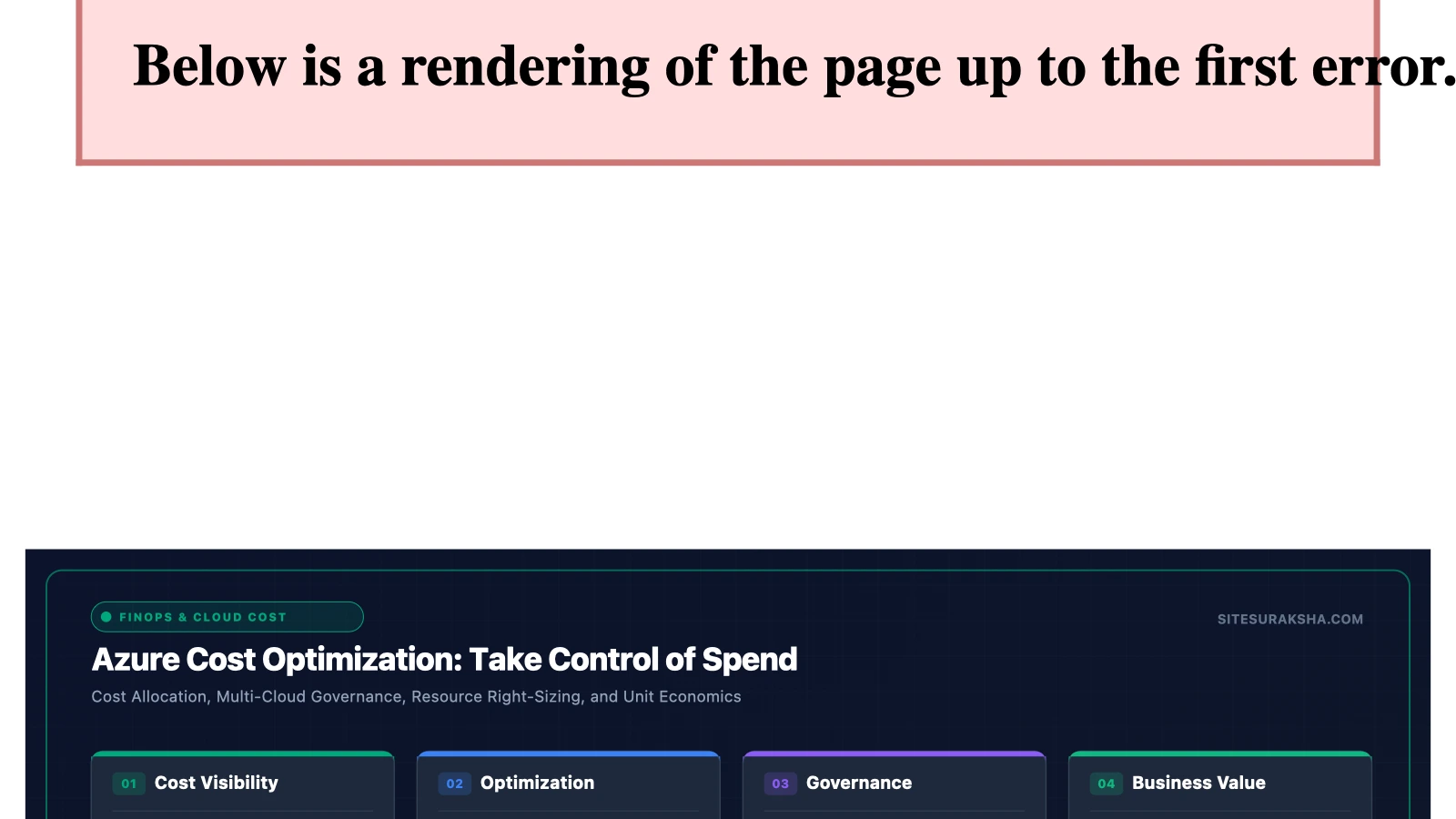
Take Control of Your Costs on Azure: Maximizing Efficiency with Cloud Cost Optimization Platforms


Chat with an engineer on WhatsApp within 15 minutes.
In the fast-paced digital era, cloud computing has become a cornerstone for businesses aiming to
enhance agility, scalability, and innovation. Microsoft Azure, a leading cloud service provider,
offers a full suite of tools and services that help organizations to build, deploy,
and manage applications efficiently. However, without effective cost management, the benefits of
Azure can be overshadowed by escalating expenses, impacting profitability and growth.
This blog delves into how you can take control of your Azure costs by understanding common
challenges, using Azure’s native cost management tools and recognizing their limitations,
and ultimately enhancing your cost optimization efforts with dedicated Cloud Cost Optimization
and FinOps platforms.
Understanding the Cloud Cost Challenge
Transitioning to the cloud introduces a dynamic environment where resources can be provisioned
and scaled on-demand. While this flexibility is advantageous, it can also lead to:
Over-Provisioning: Allocating more resources than necessary,
resulting in unnecessary costs.
Lack of Visibility: Difficulty in tracking resource utilization and
identifying cost drivers.
Underutilized Resources: Running idle or oversized instances that
consume budget without delivering proportional value.
Complex Pricing Models: Navigating Azure’s intricate pricing
structures without specialized knowledge can be challenging.
Azure’s Native Cost Management Tools
Microsoft Azure provides several native tools designed to help users monitor and manage their
cloud spending:
1. Azure Cost Management and Billing
Overview: Provides insights into your cloud expenditures, allowing you to analyze costs
by subscription, resource group, service, or resource.
-
Limitations:
-
Complex Navigation: The interface can be overwhelming for new users, making it
difficult to find specific cost data. -
Limited Customization: Reports may not fully align with unique organizational
structures or reporting requirements. -
Historical Data Focus: Emphasizes past spending with limited predictive
analytics for future forecasting.
-
Complex Navigation: The interface can be overwhelming for new users, making it
2. Azure Advisor
Overview: Offers personalized recommendations to optimize your Azure deployments,
including cost optimization suggestions.
-
Limitations:
-
Scope of Recommendations: May not cover all services or provide detailed
guidance for complex environments. -
Manual Implementation: Requires users to manually implement recommendations,
which can be time-consuming.
-
Scope of Recommendations: May not cover all services or provide detailed
3. Azure Pricing Calculator
Overview: Helps estimate the cost of Azure services before deployment by allowing
configuration of resources.
-
Limitations:
-
Static Estimates: Does not account for dynamic workloads or usage fluctuations
over time. -
Complex Configurations: Can be challenging to model intricate architectures or
scenarios accurately.
-
Static Estimates: Does not account for dynamic workloads or usage fluctuations
4. Azure Monitor
Overview: Collects and analyzes data on the performance and health of your resources.
-
Limitations:
-
Cost Monitoring: Primarily focused on performance metrics rather than detailed
cost analytics. -
Additional Configuration: Requires setup to correlate performance data with cost
information.
-
Cost Monitoring: Primarily focused on performance metrics rather than detailed
5. Budgets and Alerts
Overview: Allows you to set spending limits and receive alerts when costs approach or
exceed these thresholds.
-
Limitations:
-
Reactive Approach: Notifications are sent after spending has occurred, which may
be too late to prevent overspending. -
Basic Functionality: Lacks advanced features like predictive alerts or anomaly
detection.
-
Reactive Approach: Notifications are sent after spending has occurred, which may
6. Resource Tags
Overview: Enables organization of resources through tagging for better cost allocation
and management.
-
Limitations:
-
Manual Process: Relies on consistent application of tags by users, which can
lead to inconsistencies. -
Enforcement Challenges: Difficult to make sure all team members adhere to tagging
policies, especially in large organizations.
-
Manual Process: Relies on consistent application of tags by users, which can
The Limitations of Solely Relying on Native Tools
While Azure’s native tools provide a foundation for cost management, they may
not suffice for full optimization:
Limited Automation: Often require manual intervention to act on
insights, delaying optimization efforts.
Scope Constraints: May not address all Azure services or
complex, multi-resource configurations.
Single-Cloud Focus: Lack multi-cloud support, limiting
visibility for organizations using multiple cloud providers.
Basic Reporting: May not offer the depth of customization needed
for various stakeholder requirements.
Insufficient FinOps Integration: Challenges in promoting
collaboration between finance, development, and operations teams.
Scalability Issues: Native tools may struggle with increased
data volume and complexity as organizations expand.
The Importance of Cloud Cost Optimization Platforms
To address these limitations, investing in dedicated Cloud Cost Optimization and
FinOps platforms can significantly enhance cost management efforts. These platforms offer:
Full Visibility: Unified view of cloud spending and
resource utilization, often across multiple cloud providers.
Advanced Analytics: Use machine learning and predictive
analytics for proactive cost management and forecasting.
Automation: Implement policies that automatically adjust
resources based on real-time usage and performance metrics.
Customized Reporting: Create tailored dashboards and reports to
meet the specific needs of different stakeholders.
Enhanced Collaboration: Build better communication between
finance, operations, and development teams through integrated FinOps practices.
Scalability: Efficiently handle complex environments and large
data volumes without performance degradation.
Governance and Compliance: Enforce organizational policies and
maintain compliance with industry regulations consistently.
Using FinOps Practices
FinOps, the convergence of “Finance” and “DevOps,” introduces financial
accountability to the variable spend model of cloud computing. By adopting FinOps practices,
organizations can:
Achieve Cost Transparency: Provide detailed insights into cloud
spending at every level of the organization.
Promote Cross-Functional Collaboration: Unite finance,
technology, and business teams to collectively optimize cloud costs.
Optimize Performance and Cost: Balance resource utilization with
financial efficiency, making sure optimal performance without unnecessary expenditure.
Usable Steps to Take Control of Your Azure Costs
To effectively manage and optimize your Azure costs, consider the following
action items:
Conduct a Full Cost Audit: Evaluate your current cloud
expenses to identify areas of overspending and inefficiency.
Implement Advanced Monitoring Tools: Supplement native tools
with platforms that offer real-time cost monitoring and predictive analytics.
Right-Size and Optimize Resources: Use automated tools to adjust
compute, storage, and network resources based on actual usage patterns.
Use Azure Reserved Instances and Savings Plans: Commit to
one-year or three-year plans for significant cost savings on compute resources.
Establish Solid Cost Governance Policies: Develop and enforce
guidelines for resource provisioning, usage, and deprovisioning across teams.
Promote a FinOps Culture: Encourage collaboration between
finance, development, and operations teams to align technology initiatives with
financial objectives.
Invest in a Cloud Cost Optimization Platform: Choose a solution
that integrates with Azure and provides advanced analytics, reporting, and automation
capabilities.
Advantages of Using Cloud Cost Optimization Platforms
By integrating dedicated Cloud Cost Optimization and FinOps platforms into your cost
management strategy, you can:
Gain Enhanced Visibility: Obtain a end-to-end view of your cloud
environment, enabling you to identify and address cost drivers effectively.
Receive Usable Insights: Benefit from tailored recommendations
and insights specific to your organization’s usage patterns and needs.
Automate Optimization Efforts: Implement policies and automation
scripts that proactively manage resource utilization and costs.
Improve Budgeting and Forecasting: Use advanced analytics to
predict future cloud spending accurately, aiding in financial planning.
Make sure Compliance and Governance: Maintain adherence to
organizational policies and regulatory requirements through consistent enforcement
mechanisms.
Help Cross-Team Collaboration: Break down silos between
departments, building a unified approach to cloud cost management.
Conclusion
In conclusion, effectively managing and optimizing cloud costs in Azure requires a proactive
and end-to-end approach. While Azure’s native tools provide valuable insights, they often fall
short in addressing the complexities of modern cloud environments. By using dedicated
Cloud Cost Optimization platforms and adopting FinOps practices, organizations can gain
full visibility, implement advanced analytics, and build collaboration across
teams. Taking usable steps such as conducting thorough audits, right-sizing resources,
and establishing solid governance policies will help organizations to control their
cloud expenditures and maximize the value derived from their Azure investments. Embracing
these strategies not only helps in achieving cost efficiency but also supports the
organization in adapting to the changing cloud landscape.
Help your organization today by adopting advanced cost management practices and platforms
to harness the full potential of Azure without compromising on financial efficiency.
Save on Cloud and AI. Get a Demo.
A short call to understand what you run, then a demo built around it. Not a slide deck,
and nothing to install.
- 1
Tell us what you are running
Enough to make the demo yours rather than generic. We do not touch your account to show you this.
2 minutes
- 2
A short call to understand your setup
Which clouds you run, how you ship, and where the cost questions actually come from.
15 minutes, within 1 business day
- 3
We show you your cost footprint
Cloud and AI spend in one view: what you are running, what it costs, and where it is concentrated.
30-minute demo, built for your stack
- 4
You leave knowing what it would catch
We price a real pull request in front of you and route it for approval. That is the part no dashboard does. You see exactly which of your own changes would have been flagged.
Yours to keep, demo or not
Every demo includes the free SiteSuraksha Savings Report. Connect read-only and your savings opportunities come back within days, ranked by value, with a walkthrough call included. Read-only, always: we never modify your infrastructure.
Is Your Website Fast & Secure?
Run an instant scan for security vulnerabilities, bloated plugins, and TTFB latency.
Need Help Securing or Speeding Up Your Site?
Get 24/7 proactive security WAF, daily cloud backups, and sub-second speed optimization from ₹3,470/mo.