 Site
10 Strategies for Optimizing AI Costs with FinOps
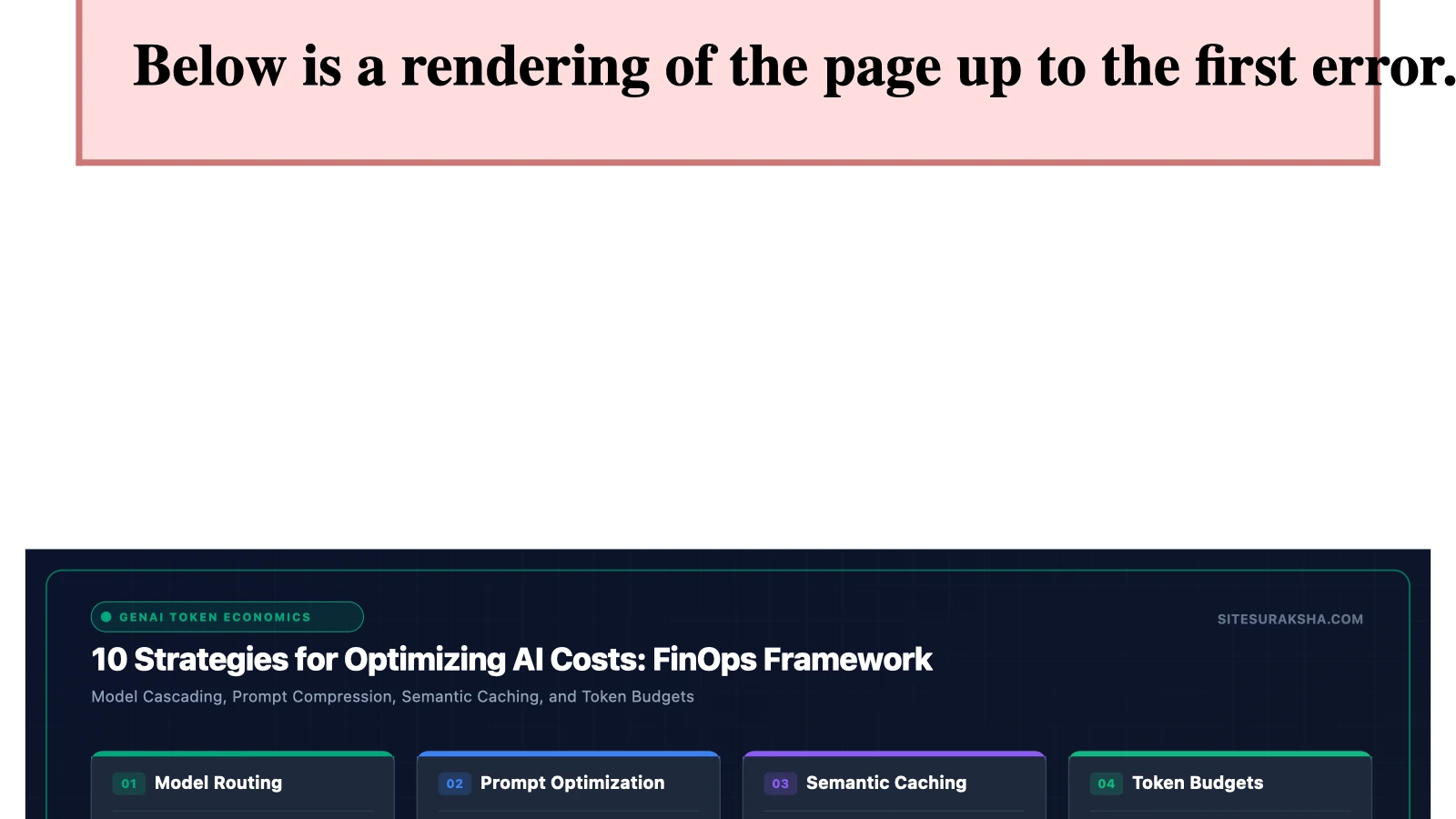
10 Strategic Insights for Optimizing AI Costs with FinOps
Artificial Intelligence (AI) has the potential to reshape industries, but its resource-intensive nature can lead to rapidly escalating costs if not managed effectively. SiteSuraksha has conducted extensive research on optimizing AI spending through FinOps (Financial Operations) and multi-cloud strategies. By applying structured cost management practices, organizations can achieve sustainable, cost-efficient AI innovation.
Chat with an engineer on WhatsApp within 15 minutes.
This guide presents ten strategic insights that will help simplify AI expenses, optimize resource utilization, and improve operational efficiency, while making sure complete control over cloud investments.
1. Gain Complete Cost Visibility
Overview:
AI workloads are notorious for their unpredictable resource consumption. Without a clear view of your spending, unexpected budget overruns can occur, and resources may be allocated inefficiently.
FinOps Advantage:
- Real-Time Monitoring: Keep a close eye on expenditures across multiple cloud providers.
- Budget Alignment: Make sure every dollar is spent wisely, avoiding unnecessary costs.
SiteSuraksha Dashboard Highlight:
SiteSuraksha’ dashboards display “All Cloud Spend Against Budget,” providing immediate insights into your AI expenditures versus your set budgets. This lets you to make informed decisions and swiftly adjust strategies as needed.
2. Optimize Resource Utilization
Overview:
High-performance AI models demand significant computational power. However, over-provisioning leads to wasted resources and inflated costs. FinOps enables you to right-size your resources based on actual workload demands.
Key Benefits:
- Efficiency: Match resource allocation with workload intensity for optimal performance.
- Cost Savings: Avoid overspending on underutilized assets.
SiteSuraksha Dashboard Highlight:
With the “Resource Rightsizing” feature, SiteSuraksha helps you identify and adjust underutilized or oversized resources, making sure your cloud investments are as efficient as possible.
3. Find Cost-Saving Opportunities
Overview:
A proactive approach to managing AI infrastructure matters. FinOps practices help pinpoint redundant or underused resources, enabling you to simplify operations and implement effective cost-saving measures.
Strategic Focus:
- Eliminate Waste: Decommission unused assets.
- Repurpose Wisely: Reallocate resources to areas with higher impact.
SiteSuraksha Dashboard Highlight:
The “Savings Opportunity Recommendations” section provides findings you can act on that help reduce cloud spending, turning potential waste into significant cost savings.
4. Detect and Mitigate Cost Anomalies
Overview:
Unexpected spikes in spending can derail your budget in no time. By using AI-driven insights, FinOps tools detect irregular spending patterns early, alerting your team before these anomalies escalate into major issues.
Preventive Measures:
- Early Detection: Identify cost spikes in real time.
- Rapid Response: Diagnose and correct inefficiencies promptly.
SiteSuraksha Dashboard Highlight:
SiteSuraksha’ “Cost Anomalies Detection” feature offers real-time alerts on abnormal spending patterns, making sure swift corrective action is taken.
5. Implement Cloud Financial Management Practices
Overview:
Transparency and accountability are the foundations of effective financial management. FinOps encourages disciplined approaches such as expense categorization and chargeback mechanisms to make sure costs are attributed to the right teams and projects.
Best Practices:
- Categorization: Track expenses by department or project.
- Chargebacks: Build cost accountability across the organization.
SiteSuraksha Dashboard Highlights:
With features like “Cost Allocation by Tag” and “Chargeback Summary,” you can easily monitor and manage expenses, making sure each team is responsible for its cloud spending.
6. Enhance Governance and Ownership
Overview:
Clear governance and ownership are critical for controlling AI costs. By assigning financial responsibility to specific teams or individuals, organizations make sure that spending aligns with broader business objectives.
Governance Strategies:
- Defined Ownership: Clearly designate who is responsible for each cost center.
- Strategic Oversight: Maintain alignment with overall business goals.
SiteSuraksha Dashboard Highlights:
Visuals like “All Cloud Spend Under Management” and “Cost Accountability by Owner” help track managed cloud spend and make sure that every cost is accounted for by the right owner.
7. Track Cost Trends and Efficiency Metrics
Overview:
Monitoring historical spending trends and efficiency metrics allows you to forecast future expenditures accurately. This continuous improvement loop is what refines your cost management strategies over time.
Key Insights:
- Predictive Analytics: Use past trends to forecast future needs.
- Continuous Improvement: Identify inefficiencies and optimize resource allocation continuously.
SiteSuraksha Dashboard Highlights:
SiteSuraksha’ dashboards feature trends like “Savings Realization Trend,” “Budget Utilization Trend,” “Cost Efficiency Trend,” and “Cloud Spend Trend Analysis,” all designed to help you anticipate future spending and adjust strategies proactively.
8. Automate and Scale Cost Optimization
Overview:
As AI workloads scale, automation becomes important for maintaining cost control. Using auto-scaling, spot instances, and AI-driven workload scheduling, you can achieve efficiency without compromising performance.
Scalability Focus:
- Dynamic Scaling: Automatically adjust resources based on demand.
- Cost Reduction: Use automation to drive continuous savings.
SiteSuraksha Dashboard Highlight:
The “All Cloud Savings Realization” section tracks the cost reductions achieved through automated processes, showcasing the tangible benefits of scalable, automated optimization.
9. Forecast and Plan for Future AI Workloads
Overview:
Effective budgeting starts with accurate forecasting. FinOps-driven models that use historical data and machine learning allow you to predict future AI resource needs, so that you are prepared for scaling while staying within budget.
Planning Essentials:
- Data-Driven Forecasting: Anticipate future spending patterns accurately.
- Budget Alignment: Allocate budgets that reflect actual usage trends.
SiteSuraksha Dashboard Highlight:
The “Cloud Spend Forecast” tool provides detailed predictions based on past consumption patterns, enabling smarter budgeting and strategic planning.
10. Optimize Data Storage and Transfer Costs
Overview:
AI workloads generate vast amounts of data, and without the right strategies, storage costs can quickly balloon. Optimizing data storage, such as using tiered storage solutions, minimizing cross-region data transfers, and archiving infrequently accessed data, can significantly reduce expenses.
Optimization Strategies:
- Tiered Storage: Implement cost-effective storage solutions built for data access needs.
- Data Transfer Efficiency: Reduce unnecessary cross-region transfers.
SiteSuraksha Dashboard Highlight:
The “Cloud Spend Forecast” also helps analyze storage trends and predict future storage costs, so that your data management strategies are as cost-efficient as possible.
Conclusion
Managing AI costs in a multi-cloud environment doesn’t have to be a daunting task. With a structured FinOps approach and findings you can act on from SiteSuraksha custom dashboards, you can gain complete cost visibility, optimize resource allocation, and proactively manage your cloud spending. Embrace these ten strategic insights to not only save money but also to drive innovation and maintain a competitive edge.
Take control of your AI cloud spending with SiteSuraksha today, and help your organization to achieve sustainable, cost-efficient innovation.
Take the Next Step
Ready to optimize your AI spending? See it on your own accounts: a short call, then a demo built around what you run.
Save on Cloud and AI. Get a Demo.
A short call to understand what you run, then a demo built around it. Not a slide deck,
and nothing to install.
- 1
Tell us what you are running
Enough to make the demo yours rather than generic. We do not touch your account to show you this.
2 minutes
- 2
A short call to understand your setup
Which clouds you run, how you ship, and where the cost questions actually come from.
15 minutes, within 1 business day
- 3
We show you your cost footprint
Cloud and AI spend in one view: what you are running, what it costs, and where it is concentrated.
30-minute demo, built for your stack
- 4
You leave knowing what it would catch
We price a real pull request in front of you and route it for approval. That is the part no dashboard does. You see exactly which of your own changes would have been flagged.
Yours to keep, demo or not
Every demo includes the free SiteSuraksha Savings Report. Connect read-only and your savings opportunities come back within days, ranked by value, with a walkthrough call included. Read-only, always: we never modify your infrastructure.
Is Your Website Fast & Secure?
Run an instant scan for security vulnerabilities, bloated plugins, and TTFB latency.
Need Help Securing or Speeding Up Your Site?
Get 24/7 proactive security WAF, daily cloud backups, and sub-second speed optimization from ₹3,470/mo.